
Long
Island Wrestling Association
|
|
|
|
||||||||||||||||||||||||||||||
|
THROW CAUTION TO THE
WIND: The Proper Mental Approach 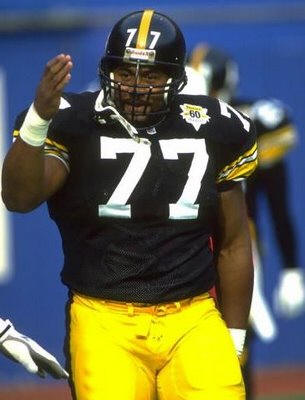 From
the book Wrestling At The Trials
by James V. Moffatt ” I remember sitting behind the bleachers about 45
minutes before the deciding match. I was depressed, feeling lousy about
everything. Joe Wells, a former assistant coach of mine at
Michigan, walked by and said the usual, ‘let that match go, this next one
is the one that counts.’ Then he told me a joke and made me laugh. That
changed my whole mood. I started to feel better. I got out of my funk and
started focusing on what I had to do in the last match.” From
the book Wrestling At The Trials
by James V. Moffatt ” I remember sitting behind the bleachers about 45
minutes before the deciding match. I was depressed, feeling lousy about
everything. Joe Wells, a former assistant coach of mine at
Michigan, walked by and said the usual, ‘let that match go, this next one
is the one that counts.’ Then he told me a joke and made me laugh. That
changed my whole mood. I started to feel better. I got out of my funk and
started focusing on what I had to do in the last match.”This was what Olympic Champion Steve Fraser had to say about the events leading up to the third match of the best of three, to make it to the Olympics. Sometimes even the very best in the world will have doubts. You start to question yourself and focus on negatives instead of ” Circling the wagons ” picking yourself up, and getting back in the fight. I think he was lucky to have such a wise coach who obviously knew what the situation called for. That story makes me recall what my coach said before the Eastern Regional Finals. Coach Don Knauf , who I want to give credit for the title of this article. Mike, the heavy weight from my team, myself and maybe a few others were up in the bleachers getting ready for the final. I could see Mike was somewhat nervous about his finals match. This was understandable since he was facing the most intimidating wrestler I ever saw in Carlton Haselrig. Let me tell you that Haselrig was a monster! I never saw another heavy weight like him. From what I understand, he set several records during his career. Among them, 6 NCAA Championships and 122 consecutive victories! He then went on to play professional football for the Steelers and become an All-Pro Offensive Lineman without ever playing college football! Anyway, we are sitting there and Mike says to coach in a somewhat shaky voice, ” Coach do you have any advice for my match?” I look over to hear his answer, and without missing a beat and with a chuckle in his voice he says, ” Yea Mike, try not to get killed!” Well, we all started laughing and I think it really worked to relieve the tension. I don’t know if that was coach’s intention or not, but Mike went out in the first period and hit Hasalrig with a Fireman’s carry and was up 5-1 at the end of the 1st. You see, your brain can not concentrate on more than one thing (more on this later). By laughing and joking around, in both cases I believe, the wrestlers stop focusing on garbage that they could not control. They made light of the situation, changed their attitude and then went out and wrestled. If you wrestle long enough you to will have to deal with several things. Unfortunately, sooner or later you will lose. How you learn from this and how it effects you mentally will go a long way in determining your success. You will also have to prepare for ‘bigger more important’ matches. Maybe not the deciding match at the Olympic Trails. Let’s say the Finals of a Christmas Tournament or the likes. Nevertheless, you will have to cross these bridges. Hopefully you will fully enjoy the experience and keep it in its proper perspective. I understand you pour so much of yourself into the sport and you want to win at all costs. In the end though, it is what it is, a sport. The greatest of all sports I feel, but still just a sport. You are not like our brave military personnel, who face true life and death situations. So be thankful for the opportunity and fully appreciate how lucky you are. I think once you realize it’s not life or death, and the sun will come up tomorrow, then you can begin to shed the unnecessary thoughts and pressures you may have placed on yourself before. You can concentrate on your match and you will probably perform much better.
Owings could have let all this get to his head and just settle for having a good tournament and 2nd place. I don’t think anyone would have faulted him for losing to Gable. He obviously had other plans. He was victorious in probably one of the most shocking matches in college history. On the other side was Gable. He could have looked at this match as his Waterloo. He could have questioned himself and focused on all the negatives. Instead he let this loss propel him to even greater things. The man became so driven that he literally became unbeatable! Some may know that he was un- scored upon during the 1972 Olympics! What you may not know is that only 1 point was scored against him during the entire Olympic run! Between the trials and the Olympics he wrestled 21 matches. Now let’s take a more in-depth look at handling a loss. Many people feel you can learn more from a loss than a win. I am not sure how I feel about that. What I do know is that I tend to remember the mistakes in matches I lost in greater detail. I look back and say, ” these are the mistakes I made and need to correct.” So maybe it is correct to say you can learn more from a loss. I once read where a wrestler said, ” If I lose a 1000 times I will be great.” What he was saying is, he would learn a tremendous amount from all the experiences. Each time he would work on improving his performance. In the end it would make him a great wrestler. I think that this is the proper attitude to take. You surely don’t have to be happy about losing, but make the best of it. Certainly this is much better than the alternatives. It is mostly understood that wrestlers display the most class and sportsmanship of any athletes. On occasion you will get a wrestler who losses control. You get the common bad reactions; throwing the headgear, kicking a garbage can or chair, slamming a door, cursing, etc. There are several points to make here. First, by doing any of these type of things you display weakness! It is a loss of self- control and means you broke mentally. It also means you need to work on your MENTAL TOUGHNESS, which is really what this is all about. Literally, mental toughness, if you break it down, means your mind is strong and resilient. Jon McGovern, Head Wrestling Coach at the University of Dubuque (IA) put it like this, “Mental Toughness is essentially giving yourself the right messages in critical times of stress, hence allowing you to withstand great strain without breaking.” He goes on to talk about working on this in practice and never losing your composure even in practice. I believe he is correct. The second point is the possible effects this has on your team and teammates. The obvious consequences are losing team points and possibly having yourself removed from further or future competitions thus hurting your team directly. It can also make your team look weak in the face of your opponents, the fans and possibly the referee. The third point that I would like to make is that while you are having this break down, you often force your coaches away from the mat-side. Depending on the nature of your outburst, one or more coaches attention can be diverted from what he should be doing which is attending to your teammates match, and giving him the same coaching you would want. This is a very selfish act, in my opinion. The last thing I would like to say, because I have seen it happen more than once is doing something stupid that can ruin your season – or even end your season. For example, I have seen kids punch the wall or even the floor, breaking bones in their hands and in effect, ruining any chance of having an outstanding season. I have also witnessed or have heard about incidents involving punches being thrown toward opponents, fans and even coaches and officials. This is never good and could end your season, or worse, cause others to get involved which will affect them. In the end, handle your losses properly. Handle them as a champion would. In the previously mentioned book, I could not believe how many of our great Olympians had to deal with losses getting through the Trials to the Olympics. Very few were like Gable and could dominate. As a coach I think each team should have strict rules about match and competition behavior. I, for example, want my wrestlers to remain on or by the bench where they can support their teammates regardless of the outcome of their match. Each team should make policies for what they feel is best for the wrestlers. On the other side is winning. While I think you must learn to ‘handle a loss’, you must also learn how to win. In wrestling again, I feel that the vast majority do the right thing and display class and respect for their opponent in victory. In other words, there is not a lot of show boating and dancing after each match. I believe this is the way it should be. You take each victory in stride. Keep a level head as you focus on your next victory. To me there is a line to being a confident athlete who is positive, motivated, intense, and focused; and one who is cocky, gets a swelled head, loses focus and starts overlooking or disrespecting his opponents. This is one of the differences between the true champions and the wanna-bees. The champions realize they have to continue to work harder and continually improve as everyone is gunning for their title. While the wanna-bees think they are unbeatable, stop giving the extra effort and are soon passed by. Many will recognize the phases- “he overlooked or underestimated him.” “He was looking ahead to his next match.” Often times this is the excuses given for a loss that “shouldn’t have happened.” I think losses where you didn’t wrestle to your full ability do to lack of focus, effort or preparation are the hardest ones to swallow! Don’t let this happen to you! Learning to win, in my experience, has been more of a team issue than an individual issue but does effect both. I remember when I first heard someone say ” this team needs to learn how to win” and thinking that it was pretty stupid. As I found myself in different situations while coaching, though, I better understood the point. For example, you may hear ” this team has the talent” or ” if we could just put it all together.” It is the same with individuals, “he has all the talent in the world but he…” and you can fill in the rest… Doesn’t work hard enough, doesn’t want it bad enough, misses practice, screws around, doesn’t listen, etc. There can be several factors affecting the athletes performance and causing him not to reach his potential. Maybe it is the increasing pressure of winning that is causing the problems. Take a look at someone who knew how to handle pressure, Cael Sanderson. As his mounting undefeated record grew, the amount of people taking notice snowballed. He had to contend with the added publicity and what comes with it; demands of his time for interviews, autographs, pictures, articles and the likes. You know he had to feel the increased pressure. He had to prepare for his matches like everyone else, but also with all the other demands placed on him. Cael handled it all like the true champion he was. From what I have heard he was more than generous to his many fans, and would often stay hours after matches to sign autographs. So how did he do it? When asked he said “he focused on his routine.” He had his pre-match warm ups that he followed. He focused on this and what he knew he needed to do to get ready for each and every match. By concentrating on his routine all outside distractions are virtually eliminated. He prepared for match 159 just like match #1. A pre-match warm up routine is something ever wrestler should develop. Like Sanderson’s it should keep you focused on the task at hand. You eliminate all the outside distractions that you cannot control. For example, who you’re wrestling, what’s at stake , where your wrestling, what color mat you’re wrestling on, and any other stupid thing that you have no control over. The little trick here as was mentioned earlier, is that, you can really only concentrate on one thing. An example would be using breathing techniques to help calm yourself down when you feel you’re losing focus. Maybe listening to music works for you or is something you can try. The end results that you want is to 1) eliminate negative or other thoughts that raise your anxiety level and 2) Minimize the nervousness that wastes your energy. Now let’s take a look at a few more things to help give you the mental edge. Be confident. A confident athlete believes in their ability. They are able to accept criticism, and deal with adversity. When things are not going well they focus on their strengths and continue fighting looking for ways to win. Champions believe that victories are earned through hard work and not luck. Stay positive. As I have pointed out, everyone is going to have set backs. They will occur in both life and sports. Your attitude toward adversity will play a major role in how these set backs will affect you. For example, your coach has been ‘riding you hard’ all week, your girl is on you because you have to ‘wrestle every weekend’, and to top it off the ‘officiating stinks’! Are you going to dwell on this and blow it out of proportion? Or are you going to deal with-it and remain focused on the task at hand? Staying positive and telling yourself “I can still perform well despite all this crap.” Life is not always fair, learn to play the hand you’re dealt and find a way to win! A note here: something all athletes should learn to do is replace ‘Negative self Talk’ with ‘ Positive strength based thoughts.’ Learn to ‘catch’ yourself when your thoughts slip from positive and immediately change them. The classic “I can’t” to “I can” or “I feel tired” to “I’m feeling great!” are some quick examples. You may be amazed at how well this works for you. Seek out the best competition you can find. You might be asking yourself, “How is getting pounded” going to make me mentally tougher? If so, go back and reread. You should never think that way! You should learn from the old saying ‘ to be the best you have to beat the best.’ Never run from top competition. It will bring out your best and will only make you better. Wrestle to win. Another old saying “play not to lose and you can never win” is true. Competitors who do this wrestle scared. They worry about making mistakes, they are indecisive in their moves and they doubt themselves. All the best wrestlers are bold. They are fearless in their attack. Not afraid to take chances, they “throw caution to the wind” and shoot their techniques. The last point I would like to make is about your training. The harder you train, the harder it becomes to lose, is yet another old saying that fits here. If you learn to push yourself a little harder every day and give the extra effort it will translate into greater physical, as well as, mental toughness. I believe that the proper attitude and mind set is extremely important for the wrestler. If you are willing to work hard, stay positive and keep things in their proper prospective you will be better able to deal with everything that is thrown at you, and will go a long way in this sport. This is one of the main reasons why athletes who train with me tend to do much better so quickly. Besides the obvious reason, that a properly trained and stronger athlete is a better athlete. The workouts are designed to challenge them each and every time the are down at the gym. This rapidly translates into better performances in competition. I hope this article gives you some things to think about and work on. As always if you have any questions, feel free to contact me at ironwill@optonline.net. Till next time, GOOD LUCK; Coach Ellinger
|














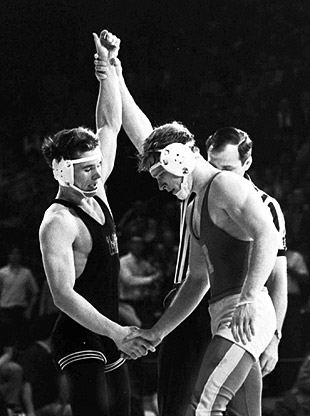 Let’s
take a look at an historic match that I think most closely relates to the
points I am trying to make. 1970 NCAA finals Dan
Gable vs. Larry Owings. This match became
legendary because of the tremendous upset pulled off by Owings. This leads
me to my first point about the match. Gable was an undefeated 2x NCAA
champion. As dominant as any collegiate wrestlers you would ever see.
Let’s
take a look at an historic match that I think most closely relates to the
points I am trying to make. 1970 NCAA finals Dan
Gable vs. Larry Owings. This match became
legendary because of the tremendous upset pulled off by Owings. This leads
me to my first point about the match. Gable was an undefeated 2x NCAA
champion. As dominant as any collegiate wrestlers you would ever see.